.webp&w=3840&q=75)
The first thing that surprised me about the London banya wasn't the heat. It was the sequence.
There was a room to arrive in. Then a room to sweat in. Then a bucket of cold water. Then back to the arrival room, with tea, and silence, and the particular feeling of having put your body through something it found instructive. Nobody was tracking anything. Nobody was counting minutes. The whole session ran about three hours, and I left feeling like I'd slept somewhere very good.
That was during the Cake years, when I had a Sunday slot I more or less guarded. The banya worked not because Russian steam has some quality that Finnish steam doesn't, but because the ritual had structure. It was three rooms and a cold bucket, in order, weekly, non-negotiable. The body responded to the repetition.
I've been thinking about that structure a lot lately. The cold plunge trend has primed a new audience for thermal wellness. People who've learned what a sharp temperature drop does to their nervous system are starting to wonder what came before it. The russian banya is that thing. Here's what it actually is.
What a Banya Is (and Isn't)
A banya isn't a sauna you pour water on. The distinction matters.
A Finnish sauna runs dry, typically 80–100°C with humidity below 20%. The Russian banya runs hotter and wetter simultaneously. Temperatures sit around 60–80°C, with humidity pushed to 60–80% by ladling water directly onto heated stones called the kamenka. The result is a par: a dense, wet heat that coats the skin rather than drying it.
That difference in humidity changes the experience completely. In a dry sauna, your sweat evaporates quickly and cools you. In a banya, the saturated air slows evaporation, and the heat builds against your skin in a way that feels more immediate, more physical, more like something is actually happening. It's.
The kamenka is the heart of the banya. Stones are heated, sometimes for hours, before a session begins. When water hits them, the released steam can briefly reach 120°C before it disperses through the room.
An experienced banshchik manages this carefully. Small additions of water, steady attention to the room, heat built gradually rather than spiked.
The Three Spaces
A proper banya is organized around three rooms. The sequence matters.
- The predbannik. The changing room, but also the recovery room. You arrive here, you undress, you return here between rounds to rest. In older banya culture, the predbannik was where people talked, drank tea, ate pickles, and sometimes napped under rough linen. It's not a waiting room. It's half the ritual.
- The moechnaya. The washing room, where you clean before and after the steam. In traditional banyas this is where birch brooms were soaked and rinsed, and where cold water was poured after the steam room.
- The parilka. The steam room itself. The room where the kamenka lives, where the par rises, where the venik work happens. Sessions inside run 10–20 minutes, followed by a return to the predbannik or a cold plunge, then another round. Most banya sessions involve three to five rounds.
The cold between rounds isn't optional, but structural. The contrast between heat and cold is where most of the physiological action takes place: the cardiovascular response, the shift in circulation, the feeling afterward that something has reset.
The Venik: The Part Everyone Gets Wrong
Western writing about the banya tends to describe the venik as a "birch branch whisk" and move on. That undersells it considerably.
A venik is a bundle of tree branches, most often birch or oak, sometimes eucalyptus, harvested in early summer when the leaves are at their most supple, then dried, bundled, and stored. Before a session, veniks are soaked in warm water to rehydrate the leaves. In the parilka, they serve two functions.
The first is aromatic. Wet birch releases a subtle, warm fragrance as the steam rises through the leaves. It's distinct from perfumed oils and quieter than anything you'd find in a spa. Oak smells earthier, more resinous. Eucalyptus is sharper and clears the airways.
The second function is physical. The banshchik uses the venik to sweep hot air down from the upper part of the room, where heat concentrates, and directs it across skin and muscle. The result is a localized intensification that ambient temperature alone doesn't produce.
The leaves make brief contact as they sweep across the body. That mild mechanical pressure has some overlap with what research describes in contrast therapy: blood pushed toward the surface, brief inflammation, and the repair response that follows.
A skilled banshchik reads the person as much as the room. The pace, the pressure, the sequence of passes across the back and legs. It's a practice with real technique, accumulated over years. The venik work is called parenie, and it's specific enough to deserve its own treatment.
A Brief History of a Very Old Practice
Banya culture traces to at least the 12th century in Slavic communities, and likely earlier. The earliest written descriptions appear in the Primary Chronicle, the medieval Slavic historical record, which documents the banya as part of ordinary domestic life, not a luxury or a ceremony.
For most of Russian history, the banya was a weekly practice. Saturday was banya day. Entire families went. It served hygiene, yes, but also sociality. The banya was where news was exchanged, decisions were made, disputes were sometimes settled. Birth, illness, and death all had their banya traditions. The steam room was where people arrived and where they prepared to leave.
The Soviet period disrupted private banya culture but maintained public banyas as social infrastructure. Many Russian cities still have them. In rural areas, the private backyard banya (a small wooden structure separate from the main house) remains common.
What's happening now is something different: the banya is being discovered by people who came to thermal wellness through the Finnish sauna boom of the 2010s and the cold plunge moment of the early 2020s. They're finding that the banya offers something those practices don't quite reach. Not because of superior physiology, but because of what the three-room structure actually does to time.
How It Differs from a Finnish Sauna
The comparison is worth making carefully, because it's often made poorly.
The Finnish sauna has the stronger research base for cardiovascular outcomes. The landmark work from Jari Laukkanen's team tracked sauna use over decades and found associations between frequency and reduced cardiovascular mortality.
That research is on dry saunas, Finnish-style, at 80–100°C. It doesn't map directly onto the wet Russian format. The physiological conditions differ enough that the findings can't simply be assumed to apply.
What the banya has that the dry sauna doesn't is the venik work and the room structure. The parenie session adds a manual component that dry heat alone doesn't include.
The predbannik rest isn't an afterthought. It's where the parasympathetic nervous system catches up to what the heat just did to the body. Finnish sauna culture has the cooling lake or the cold room, but not the dedicated wind-down space before and after.
Neither format is objectively better. They're different tools, shaped by different climates and different ideas about what a body needs. The practical question is which one is available to you and which one you'll actually repeat.
For what the research says about heat therapy specifically, including what holds and what doesn't, that material is covered separately.
Why the Banya Is Having a Moment
Cold plunge culture changed something.
Before the cold plunge became mainstream, thermal wellness meant the occasional spa day or a hotel sauna you used twice. After it, a meaningful number of people began thinking about cold and heat as regular practices with physiological logic behind them. They started paying attention to contrast: to what it feels like to move between extremes, and why that movement seems to matter.
The banya is the oldest available answer to that question. It's contrast therapy as a complete system, with a room for arrival, a room for heat, a room for cold, and a room for return. All of it built around the insight that the quality of the rest matters as much as the intensity of the stress.
The timing also coincides with an honest reckoning in wellness media about which practices are evidence-backed and which aren't. The banya has genuine physiological credentials. It's been in regular use for over a thousand years. The recovery community's interest in it isn't trend-chasing. It's pattern-recognition.
The Two Tools the Banya Requires
If you're going to a public bathhouse, you don't need to bring anything. The banya provides the stones, the water, and usually the veniks.
If you're building an approximation at home with a steam shower or a home sauna, the venik is the piece worth sourcing properly.
Eksmo Caucasian Oak Venik
Best For: Traditional banya sessions and banshchik-style parenie work
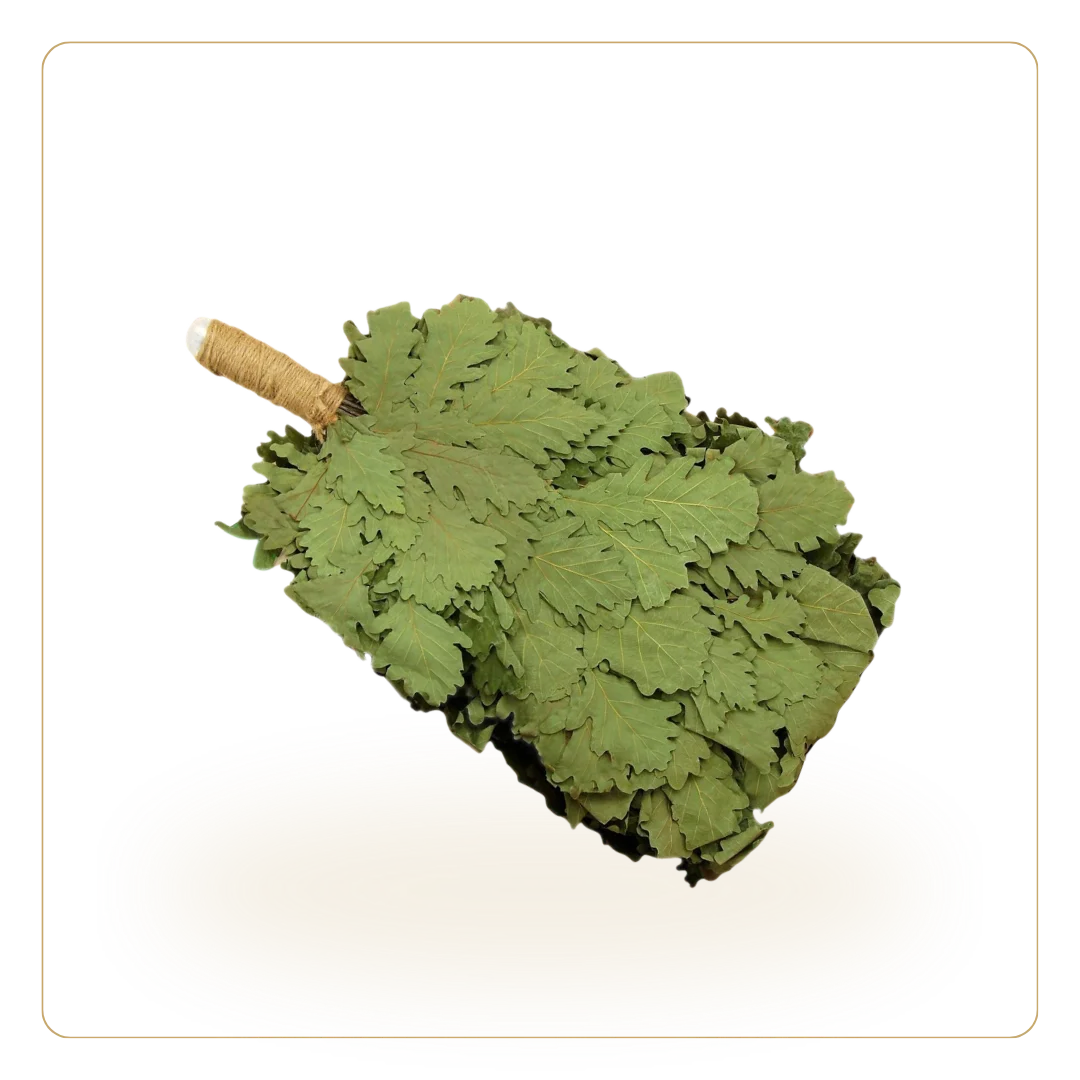
Oak holds up better under heat than birch. Where birch veniks soften and lose structure after a few rounds, a well-soaked oak venik stays firm enough to direct air properly — which matters if you're trying to do parenie correctly and not just wave branches around.
The Eksmo Caucasian oak is harvested in the Caucasus region and dried traditionally. It runs larger than most import options, which gives it better coverage across the back and legs during a sweep. The scent when wet is earthy and resinous, nothing perfumed about it.
It's not the choice for a first solo session — the technique takes practice. But it's the right tool if you're going to a banya with someone who knows what they're doing, or if you're serious about building the skill yourself.
Why We Like It
It's the most structurally honest venik available through Amazon — traditional harvest, traditional size, no synthetic fragrance added.
Price
$35.99 (check current pricing)
Birch Sauna Whisk — The Sauna Place (Latvian)
Best For: First-timers and anyone trying home parenie in a steam shower
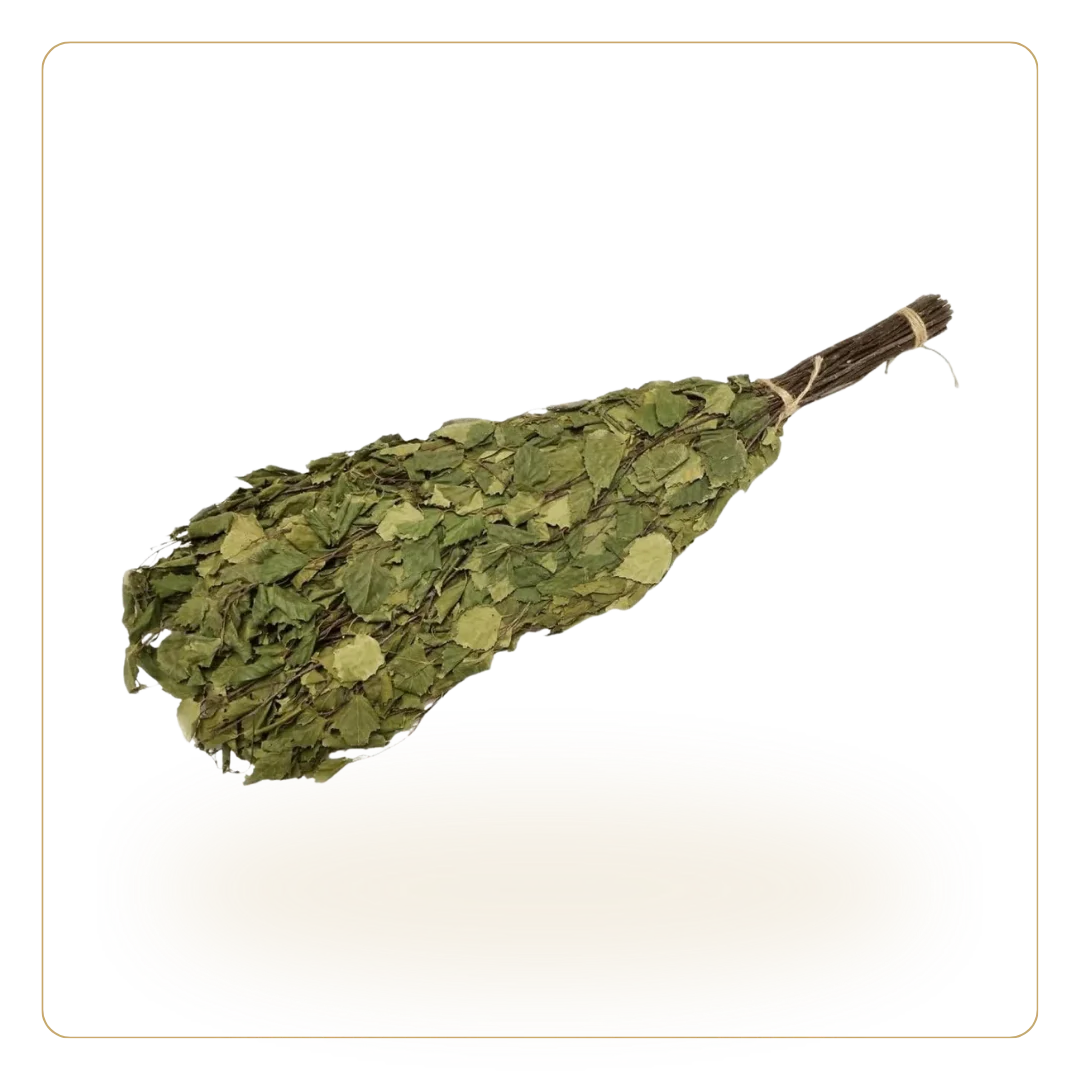
Birch is the traditional banya wood, and for good reason: the leaves are softer, the scent is gentler, and the bundle yields more easily. That softness makes it more forgiving if your technique isn't there yet.
The Sauna Place is a Latvian supplier with a longer track record than most options on Amazon. Their birch is harvested in the Baltic region, where banya culture has run continuous since before most Western wellness trends existed. The 4.8-star rating with a small review count reflects a niche product bought by people who know what they're looking for.
Soak it for 20 minutes before your session. In a steam shower at home, you won't get the full parenie effect — the ceiling height matters — but you'll get the aromatics and a reasonable approximation of the ritual.
Why We Like It
It comes from a supplier that actually understands the tradition — not a generic import bundled with a bath set.
Price
$23.99 (check current pricing)
Where to Go From Here
If you've never been to a russian banya, the first session will feel disorienting in the best way. The sequence is looser than you expect. You'll stay in the parilka longer than you planned or shorter. The cold plunge will be more clarifying than the cold shower at your gym. You'll sit in the predbannik with tea and feel like the hour passed differently than hours usually do.
The practical details are covered in the first-time banya guide: what to bring, how to move through a session, what your body will do in the heat.
If you're comparing the banya against a Finnish cabin or an infrared sauna before committing, that's a question worth taking seriously. The formats aren't interchangeable, and how the banya stacks up against a Finnish sauna, a steam room, and an infrared cabin is worth reading before you decide.
The banya works because of the structure. The three rooms, the sequence, the cold in between. Remove any of those elements and you have a hot room, which isn't nothing – but it's not this.
Editorial Disclaimer
The Ritual Guide is an independent publication. We review products, we don't sell them, and our picks aren't influenced by brand payments. This guide is editorial and informational.
What's the difference between a Russian banya and a Finnish sauna?+
The core difference is humidity. A Finnish sauna runs dry — 80–100°C, usually below 20% humidity. A Russian banya runs at lower temperatures (60–80°C) but with humidity pushed to 60–80% by ladling water onto heated stones called the kamenka. The banya also uses a venik — a bundle of branches used to direct hot air across the body — and has a distinct three-room structure that the Finnish sauna doesn't replicate.What is a venik and what does it do?+
A venik is a bundle of branches — usually birch, oak, or eucalyptus — used during the banya's steam room session. After soaking in warm water, the venik is swept from the upper part of the room down across the body, creating a localized intensification of heat that ambient steam alone doesn't produce. The technique is called parenie. Birch is softer and more aromatic; oak is firmer and holds up better across multiple rounds.How long is a typical banya session?+
A traditional banya session runs two to four hours total. Individual rounds in the steam room last 10–20 minutes, followed by a cold plunge or cold water rinse and a rest period in the predbannik. Most sessions involve three to five rounds. The length isn't fixed — it depends on how the body is responding, the quality of the heat, and who you're going with. The rest time between rounds isn't optional padding; it's where a meaningful part of the physiological response takes place.Can I recreate a banya experience at home?+
Partially. A steam shower with a venik gets you the aromatics and some of the leaf contact, but you won't get the ceiling height needed for proper parenie or the room-level heat of a kamenka. A home sauna with a steam function comes closer. The predbannik rest is achievable – a quiet room, no screens, something warm to drink. The cold plunge is achievable with a cold shower or a tub. The full three-room sequence takes some improvisation, but the principle (heat, cold, rest, repeat) is replicable.Why is the Russian banya becoming more popular now?+
The cold plunge trend introduced a larger audience to contrast therapy – moving between heat and cold as a deliberate practice. Once that idea landed, people started looking for more structured versions of it. The banya is the most complete answer available: a thousand-year-old system built around exactly that principle, with a room for heat, a room for cold, and a room for recovery. The timing also reflects a broader skepticism about the newest wellness formats and who's asking the money behind them.Disclosure: The Ritual Guide is reader-supported. When you buy through links on this page, we may earn an affiliate commission. We independently select and review every product — our recommendations are never influenced by brand partnerships. Learn more about our editorial process.